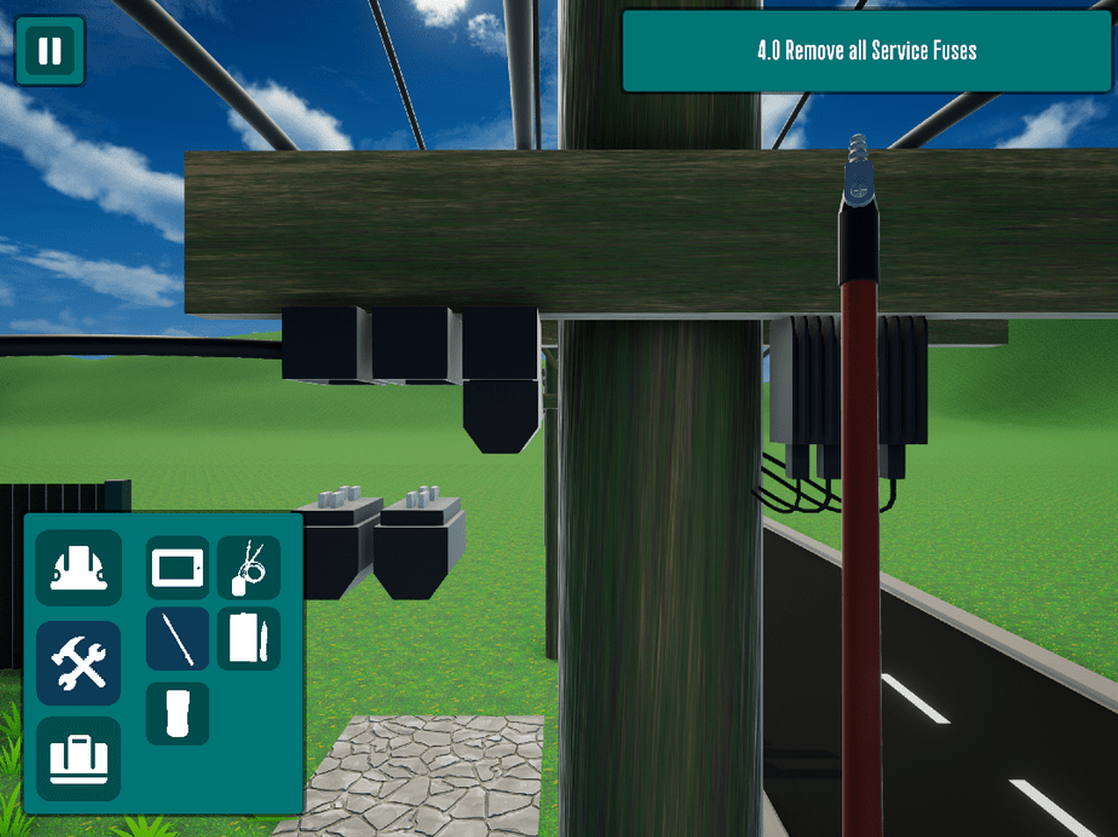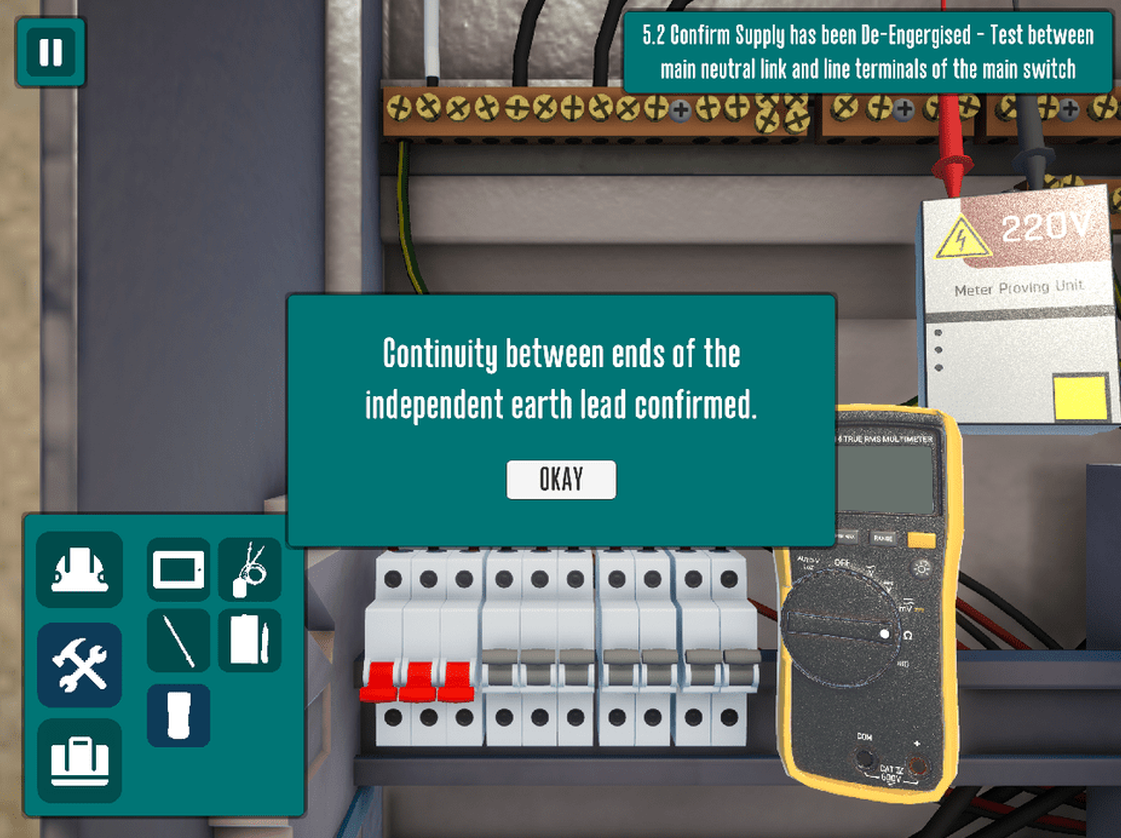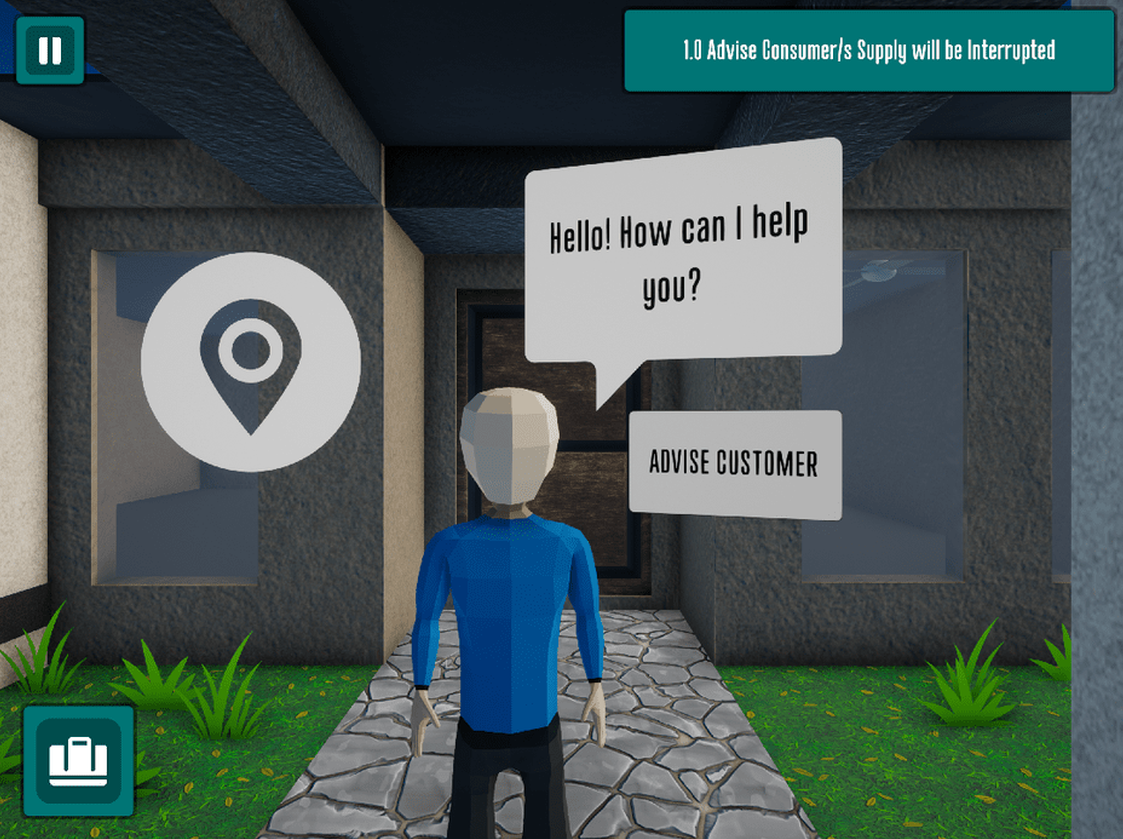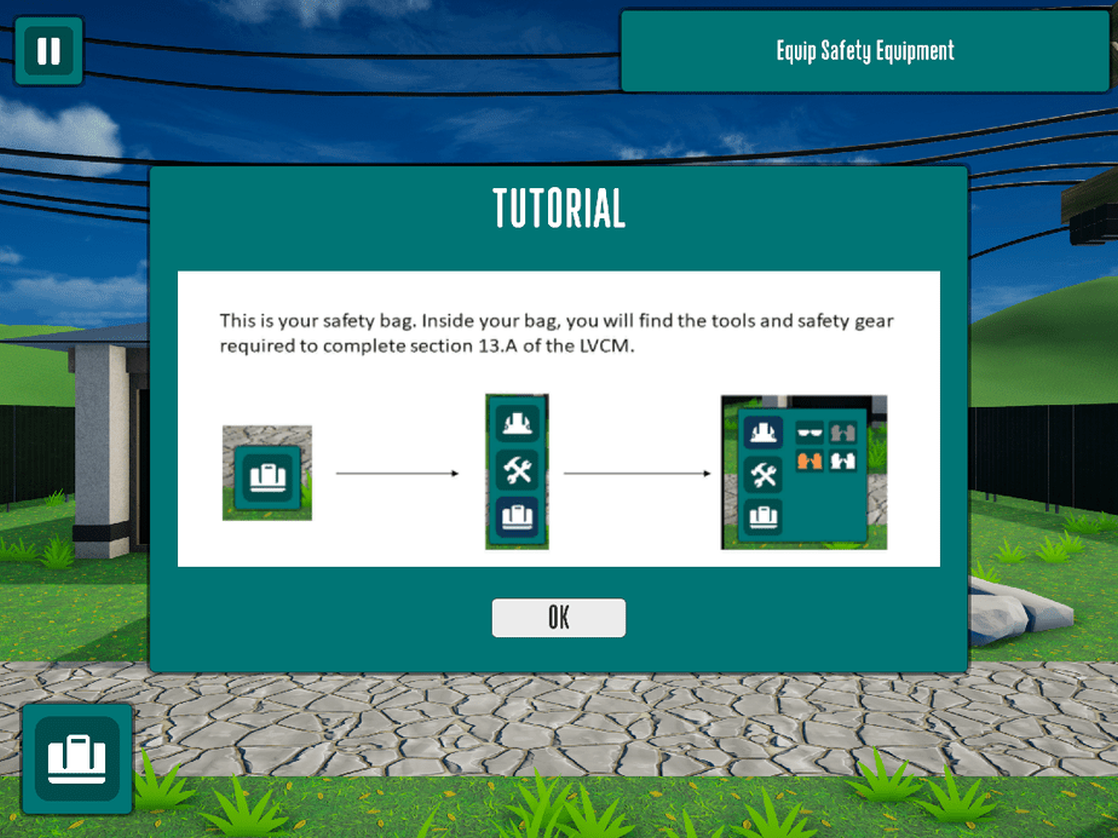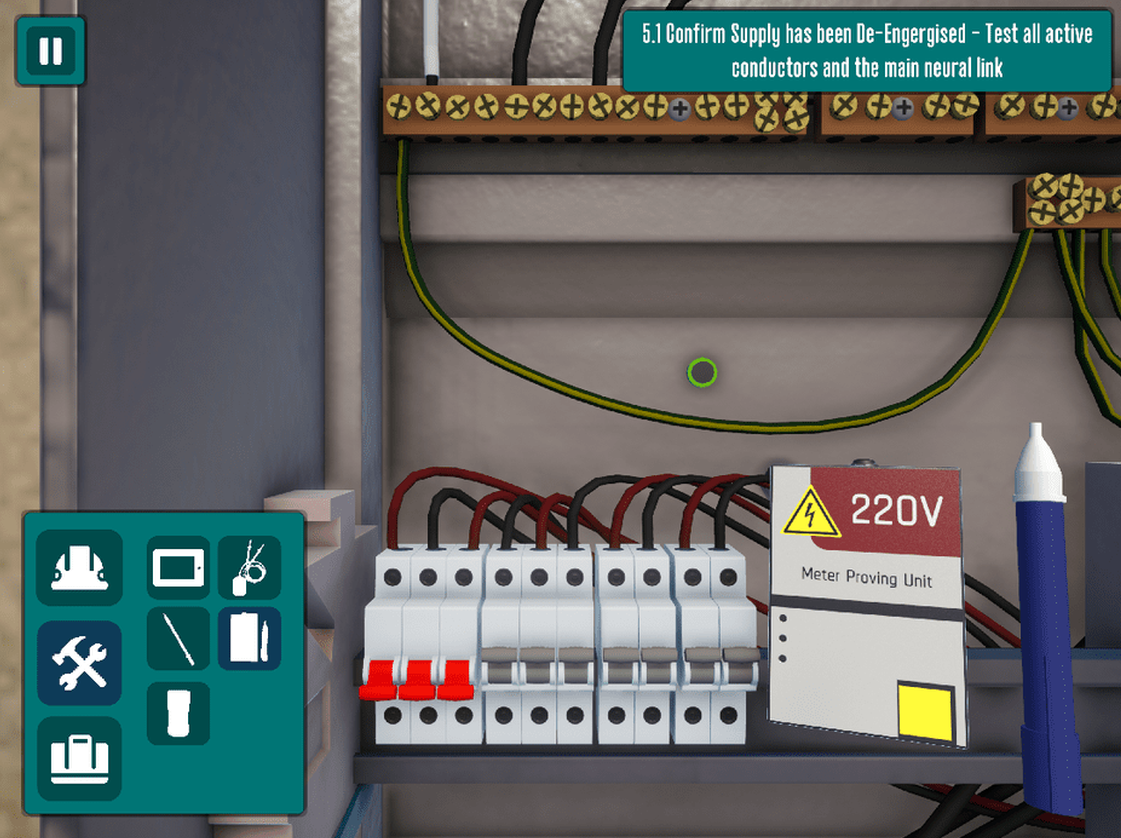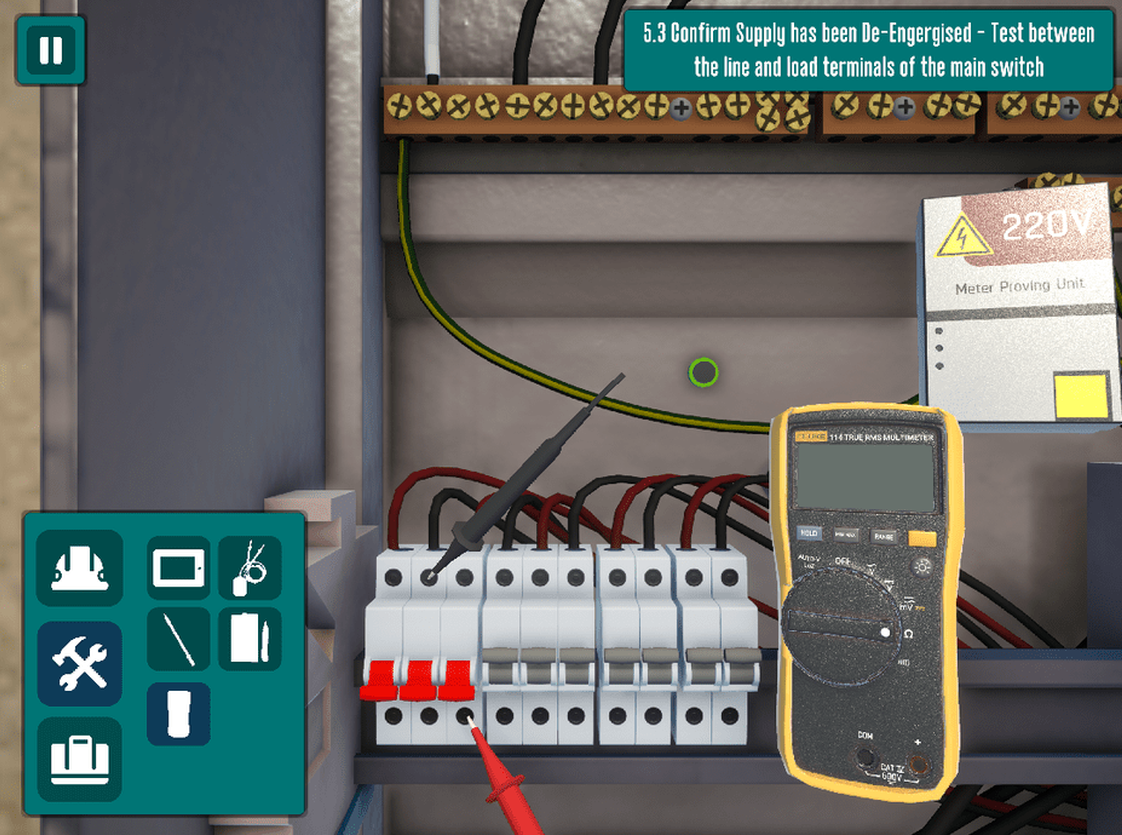
Focus: Designing and implementing an interactive training simulation that combines animation, structured user interaction, and clear visual feedback to teach real-world electrical safety procedures in a controlled, step-by-step environment.
Key Systems & Features

Interactive Tool Animations
Animated, touch-driven tool motions that demonstrate correct handling and sequences.

Step-Based Training Flow
Structured progression enforcing checklist completion before allowing the next step.

Touch Interaction System
Intuitive mobile touch gestures for picking, placing and manipulating tools and switches.

UI & Tutorial System
Contextual guidance, feedback overlays and a lightweight tutorial to onboard users.

Environmental Interaction
Interactive objects and visually clear state changes representing electrical isolation.
Technical Breakdown
Challenges & Problem Solving
One of the main challenges was implementing reliable touch-based interactions for tools such as fuse pullers and multimeters. Initial drag-and-drop systems behaved inconsistently when integrated into the main scene.
To resolve this, interactions were redesigned around animation triggers and controlled snap points rather than freeform dragging, ensuring safety-critical actions remained accurate and reliable.
Collaboration & Client Work
- Worked with Energy Queensland subject-matter experts for validation
- Participated in SCRUM meetings and sprint planning
- Iterated based on weekly client feedback
- Used GitHub and Discord for collaboration
Project Outcome
The final application successfully delivered a complete simulation of Section 13.A procedures, providing a mobile-friendly training tool that complements Energy Queensland’s existing VR training program.
Delivered as part of a capstone project assessed at High Distinction (83%).